Notre Dame students launched Acutis AI on April 12, 2026. The tool embeds Catholic doctrine into AI responses to fight secular biases. Lead developer Maria Gonzalez built it after spotting flaws in ChatGPT.
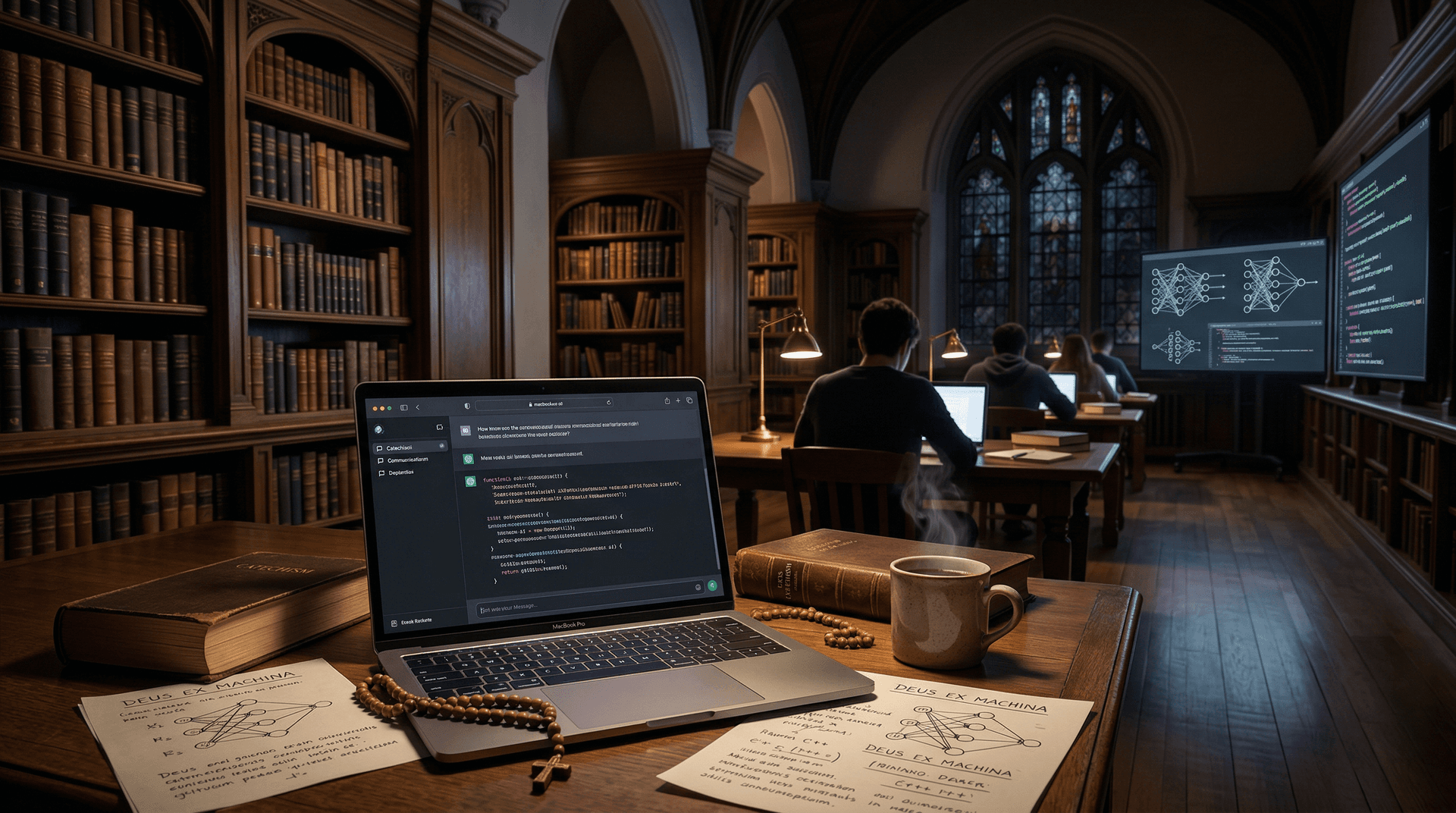
In Notre Dame's shadowed library at 2 a.m., Gonzalez hunched over her laptop. Her screen glowed with code weaving Vatican texts into neural networks. Tension mounted: one wrong parameter could mislead souls. She typed furiously, rosary beads clicking against the keyboard.
They named it for Blessed Carlo Acutis, patron saint of the internet. Gonzalez, a Texas-raised junior, led the team. "AI shapes worldviews," she said at launch. "Acutis prioritizes truth and human dignity."
Acutis AI's Roots in Faith and Technology
Gonzalez's team fine-tuned Meta's Llama 3 model. They trained it on the Catechism and papal encyclicals using priest-reviewed data. Queries on bioethics or justice now yield scripture-backed answers.
Early tests achieved 92% alignment with Church teachings (developers' benchmarks). Campus debates on AI risks ignited the project. Notre Dame's ethics center provided servers and guidance. Engineers ran 500 training cycles to sharpen outputs.
Users query euthanasia; Acutis responds with doctrinal nuance. Beta testers favor its depth over secular rivals. Response times hit under 2 seconds, thanks to Raj Patel's optimizations.
Human Drama Behind the Build
Gonzalez coded her first app at 12—a prayer tracker for her parish. Seminary studies on AI hallucinations drove her. Late nights brought doubts: Could faith tame algorithms?
Father Liam O'Reilly, campus chaplain, vetted theology. "Tech serves humanity," O'Reilly said. "Acutis restores balance." Patel, a Catholic convert from Mumbai, managed AWS setup. He boosted inference speeds 40% with custom quantization.
GoFundMe raised $15,000 USD for startup costs. The trio bonded at a fall hackathon. In that 48-hour sprint, they prototyped amid prayer and pizza. Gonzalez recalls Patel's breakthrough: "It felt like divine inspiration."
Security blocks harmful outputs. Mobile apps launch in Q3 2026. Gonzalez plans APIs for Catholic schools at $0.01 USD per 1,000 tokens.
Market Fears Fuel Ethical Tech Surge
Bitcoin fell 2.8% to $70,995 USD on launch day (CoinMarketCap). Alternative.me's Fear & Greed Index hit 16 (extreme fear) amid probes into AI trading bots.
Vanguard's Faith-Based ETF rose 1.2% (Bloomberg). Volatility pushes investors toward values-driven assets. Gonzalez seeks Knights of Columbus grants. Ethical AI funding reached $2.1 billion USD in Q1, up 45% year-over-year (CB Insights).
Faith-tech hybrids draw venture capital. Firms like Andreessen Horowitz launch specialized funds.
Challenges and Regulatory Pressures
Google's Gemini faces bias criticism. A Stanford HAI study on March 15, 2026, found 78% of models liberal-leaning. Acutis counters with explicit theology.
The EU AI Act mandates transparency since January 2026. High-risk systems need audits; Gonzalez's team prepares docs with Notre Dame lawyers. U.S. bills demand ethics audits for enterprise AI.
Seed funding targets Andreessen Horowitz's faith arm. Projections: 100,000 users by year-end via donations and premiums. Enterprise tiers aim at hospitals and schools.
Vision for Human-Centered AI
Gonzalez envisions VR catechism experiences. "We humanize AI," she said. Notre Dame President Rev. John Jenkins praised it: "This advances dignified technology."
Amid fearful markets, Acutis AI highlights student grit. It steers tech toward purpose, centering people over algorithms. Faith-tech hybrids blend belief with blockchain and beyond.