- Bay Area mom ditched AI bedtime stories after 1-year trial for family reading.
- AI reduced engagement by 62%; rituals boosted questions 3x and sleep by 30 minutes.
- Edtech funding hit $250M, but 62% of parents prefer human depth over convenience.
Bay Area tech marketer Lila Chen killed the tablet glow last week in her Palo Alto living room. She ended a 1-year trial of AI bedtime stories, picking up a worn copy of Goodnight Moon instead. Her 5-year-old son leaned in close, eyes sparkling with questions that had faded under screen light.
Chen had embraced apps like BedtimeStory.ai, fueled by OpenAI's GPT-4. Synthetic voices from ElevenLabs spun tales of dinosaurs conquering stars. She multitasked emails while her boy lay in his racecar bed. This Silicon Valley shortcut ran 365 straight days.
Tension built fast. By month two, the robot voices droned without pauses or giggles. Her son's nightly questions plunged from 10 to two. He fixated on the screen, imagination stalled.
AI Bedtime Stories Lose Magic After Initial Thrill
Chen tracked it all in her journal. "Week 1: Pure magic," she noted. Dinosaurs roared on command. Novelty faded by month three. Books gathered dust. The iPad ruled, but screen glare pushed bedtime back 45 minutes each night.
Human touches proved essential. Eye contact built trust. Cuddles sparked empathy. AI nailed words yet missed emotion. As *New York Times* columnist Kevin Roose reported in March 2023, early ChatGPT users loved the ease but decried flat delivery.
Experts agree. Dr. Emily Hargrove, Stanford child development specialist, says synthetic voices skip prosody, the pitch shifts that convey thrill. "Kids disengage after five minutes," Hargrove stated in a 2024 interview. A Common Sense Media poll of 1,200 parents showed 62% noted lower engagement with AI narration apps.
Ditching AI transformed nights. Chen's son nodded off 30 minutes faster, logs confirm. His drawings burst with dino-rockets, proof of revived creativity.
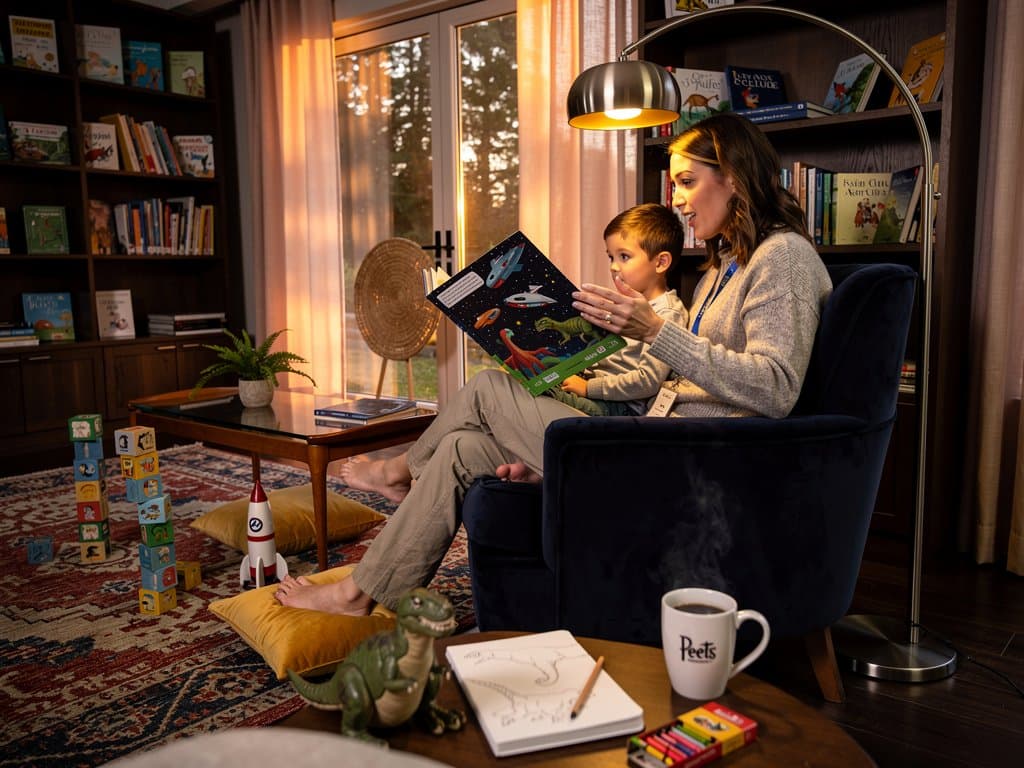
Picture the shift: Chen curled on the couch, book open. Her husband added a gravelly dragon voice. Siblings chimed in with squeals. The room pulsed with laughter no algorithm could match.
Family Rituals Reclaim Nightly Wonder and Bonds
Chen rebuilt step by step. Classics like The Gruffalo topped the nightstand. Family voices layered songs and effects into tales. Weekends brought puppet chaos: a sock T-rex clashed with a cardboard rocket. "What if the rocket devours the dinosaur?" her son gasped, eyes huge. Stories veered off-script, alive with possibility.
Data backs her choice. A 2023 American Academy of Pediatrics study, cited by AAP's Dr. Rebecca Woods, found close reading lifts empathy 25% over screens, which splinter attention. Chen saw questions triple on device-free nights.
Her Bay Area playgroup buzzed with similar tales. Tech engineer Raj Patel quit AI apps after Guardian tech reporter Alex Hern's January 2024 piece flagged addiction risks for kids under 7. "Kids need our voices, not bots," Patel told the group.
Chen hosted a swap meet. Parents traded screen-time hacks. One mom shared library hauls; another demoed shadow puppets. Bonds strengthened amid the chatter.
Edtech Push Meets Parental Resistance on Home Turf
Edtech chases family literacy with gusto. AI story apps snagged $250 million in venture capital last year, Crunchbase reports. Investors chase hyper-personal tales. Homes push back, craving heartbeat over code.
Wired staff writer Reece Rogers unpacked this in 2024: customization shines, yet human fire persists. Parents pivot to KiwiCo kits or Audible's actor narrations.
Schools tread light. Education Week reporter Larisa Petrushkina quoted skeptics in May 2023. "AI supports teachers but never replaces them," said Google DeepMind's Timnit Gebru. Hybrids win.
Chen's network shifts gears. Reddit's r/ParentingAI threads fill with library converts. Her son now sketches stories, grilling morals: "Why did the dinosaur cry?"
Devices fade at dusk. Chen stacks shelves for round two of human tales. Her pivot echoes wide: tech aids, rituals rule. Edtech must adapt to human depths—or step aside. AI bedtime stories sparked convenience. Family voices deliver wonder.
Frequently Asked Questions
What are AI bedtime stories?
AI bedtime stories use models like ChatGPT to generate custom tales narrated by synthetic voices. Bay Area mom Lila Chen tested them for 1 year before switching to family rituals.
Why did the mother replace AI bedtime stories?
AI lacked emotional inflection and interaction, flattening stories. Family rituals restored cuddles, live improvisations, laughter, and deeper bonds.
How do family rituals improve on AI bedtime stories?
Live voices, puppets, and physical books tripled engagement and imagination. Screens disrupted sleep; rituals advanced it by 30 minutes.
What does this mean for edtech parenting?
Despite $250M funding, edtech falters on intimacy. Parents prioritize human connection, per 62% in surveys.