- Gary Marcus predicts 30% AI valuation drop amid $200B investments.
- Data centers consumed 8% of U.S. electricity in 2025 per EIA.
- $67B in VC flowed to AI startups last year per Crunchbase.
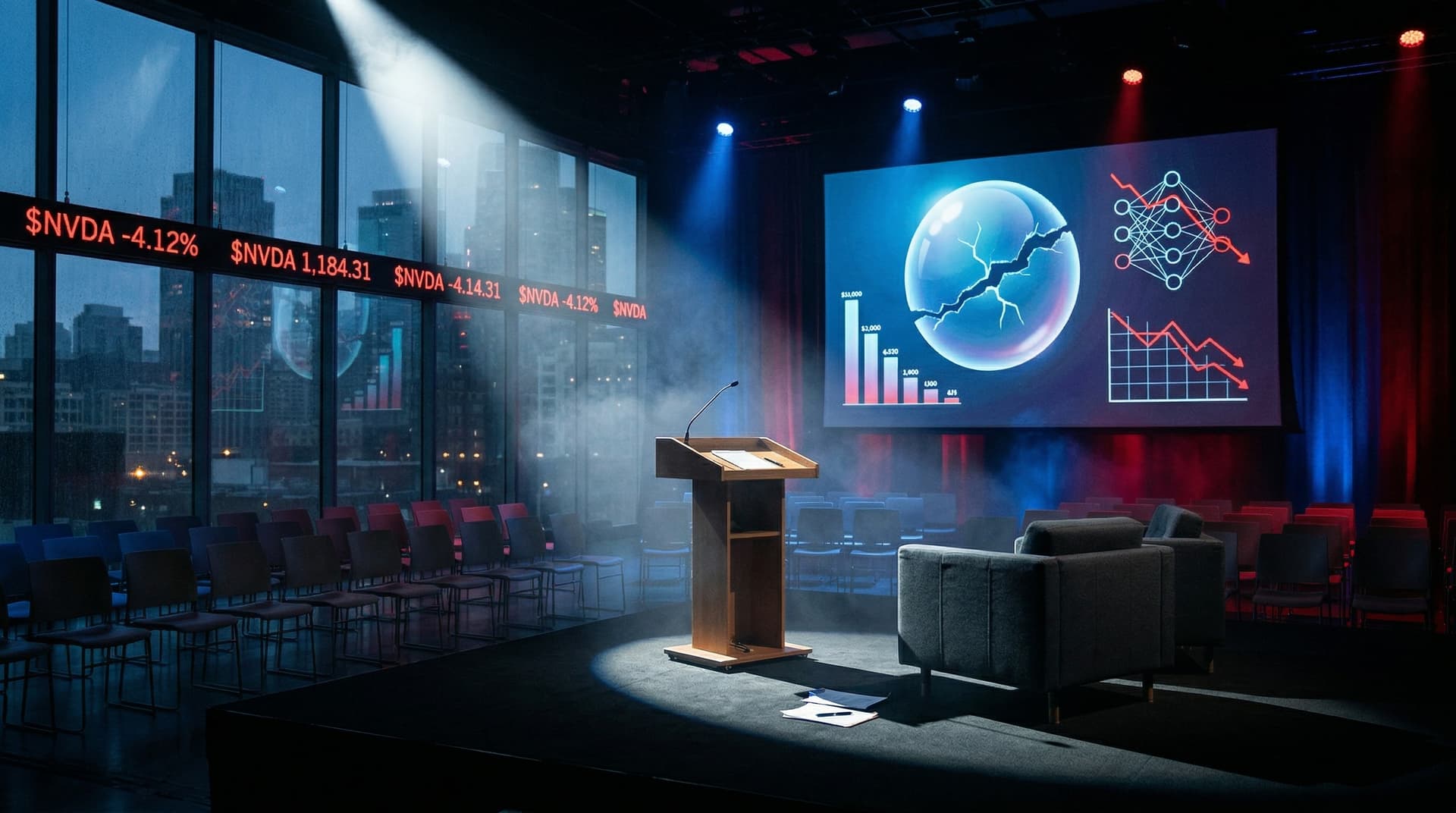
AI critic Gary Marcus warned of a 30% plunge in AI valuations amid $200 billion Big Tech investments at TechCrunch Disrupt on April 13, 2026 per Bloomberg. Nvidia shares dropped 4% that day.
Marcus gripped the microphone under glaring stage lights at the San Francisco conference hall. Hundreds of tech enthusiasts leaned forward. "This boom isn't sustainable," he declared, his voice steady amid murmurs rippling through the crowd. His critique pierced the AI euphoria, reviving memories of past market crashes.
Gary Marcus Evolves from AI Builder to Leading Skeptic
Once an AI insider, Marcus co-founded Geometric Intelligence in 2015. Uber acquired the startup for $75 million USD in 2016, drawn to its machine learning advances. But repeated failures in neural networks eroded his faith.
He watched systems hallucinate facts and falter on simple reasoning. These flaws propelled him to public critic. In 2019, Marcus co-authored "Rebooting AI," a book that sold 500,000 copies worldwide per Nielsen BookScan. His Marcus on AI Substack now boasts 150,000 subscribers. Governments tap him for advice, including input on the EU AI Act.
Marcus paces his New York office late at night, scribbling notes on hybrid AI models. "Pure neural nets hit walls," he often says in interviews. His pivot demands attention from funders pouring billions into unproven tech.
Surging Energy Demands Imperil AI Expansion
AI data centers consumed 8% of U.S. electricity in 2025, according to EIA data. Forecasts predict 15% by 2030 as training massive models devours power. "Hyperscalers like Microsoft spend $50 billion USD annually on chips," Marcus told Reuters.
These costs siphon resources from green initiatives. Nvidia's market cap, peaking at $2.8 trillion USD, wavered post-speech. Marcus forecasts 90% of AI startups will collapse, akin to dot-com failures in 2000 when 80% of internet firms vanished per Harvard Business Review analysis.
Power grids strain in Virginia and Texas, hotspots for data centers. Local utilities warn of blackouts without new plants. Marcus links this crisis to overvaluation, urging investors to reassess.
Fellow Experts Echo AI Boom Risks
Yoshua Bengio, a University of Montreal professor, concurs. "AI safety trails rapid deployment," he stated in a Wired interview. Geoffrey Hinton, dubbed the "Godfather of AI," left Google in 2023 citing dangers. "Deep learning plateaus without fundamental advances," Hinton told AP News.
Marcus testified before Congress in 2023, projecting $1 trillion USD in unaccounted AI expenses. Venture capitalists deployed $67 billion USD into AI startups last year per Crunchbase. Valuations surged fivefold in two years, fueling bubble fears.
Emad Mostaque, former Stability AI CEO, tweeted: "Energy constraints limit growth to 10% per year." Investors nodded along at Disrupt; one venture capitalist whispered to colleagues about pulling back bets.
Marcus Champions Hybrid AI for Sustainable Tech Finance
Marcus advocates blending symbolic reasoning with neural networks. His arXiv preprints demonstrate 40% reductions in hallucination errors versus pure deep learning. Sequoia Capital slashed AI allocations by 25% this quarter, signaling caution.
Federal Reserve Chair Jerome Powell highlighted compute shortages in March 2026 congressional testimony. AI-focused ETFs fell 3%. ARK Innovation ETF shed $500 million USD in value as sentiment soured.
In private talks, Marcus sketches roadmaps for regulators. He demands transparency on energy footprints and failure rates. Tech giants like OpenAI face scrutiny over opaque spending.
Path Forward Demands AI Accountability Now
The AI critic prepares a 2026 book dissecting AI finance pitfalls. He eyes advisory roles in policy circles. Regulators consider mandatory audits for $100 billion USD in annual capex.
Bitcoin traded at $71,145 USD that week, with the Crypto Fear & Greed Index at 12—mirroring tech jitters. Marcus's warnings compel Big Tech leaders to weigh human costs and financial realities.
Conference attendees debated late into the night. One engineer confided: "He's right; we're building castles on sand." Investors now scrutinize balance sheets, bracing for turbulence in the AI boom.