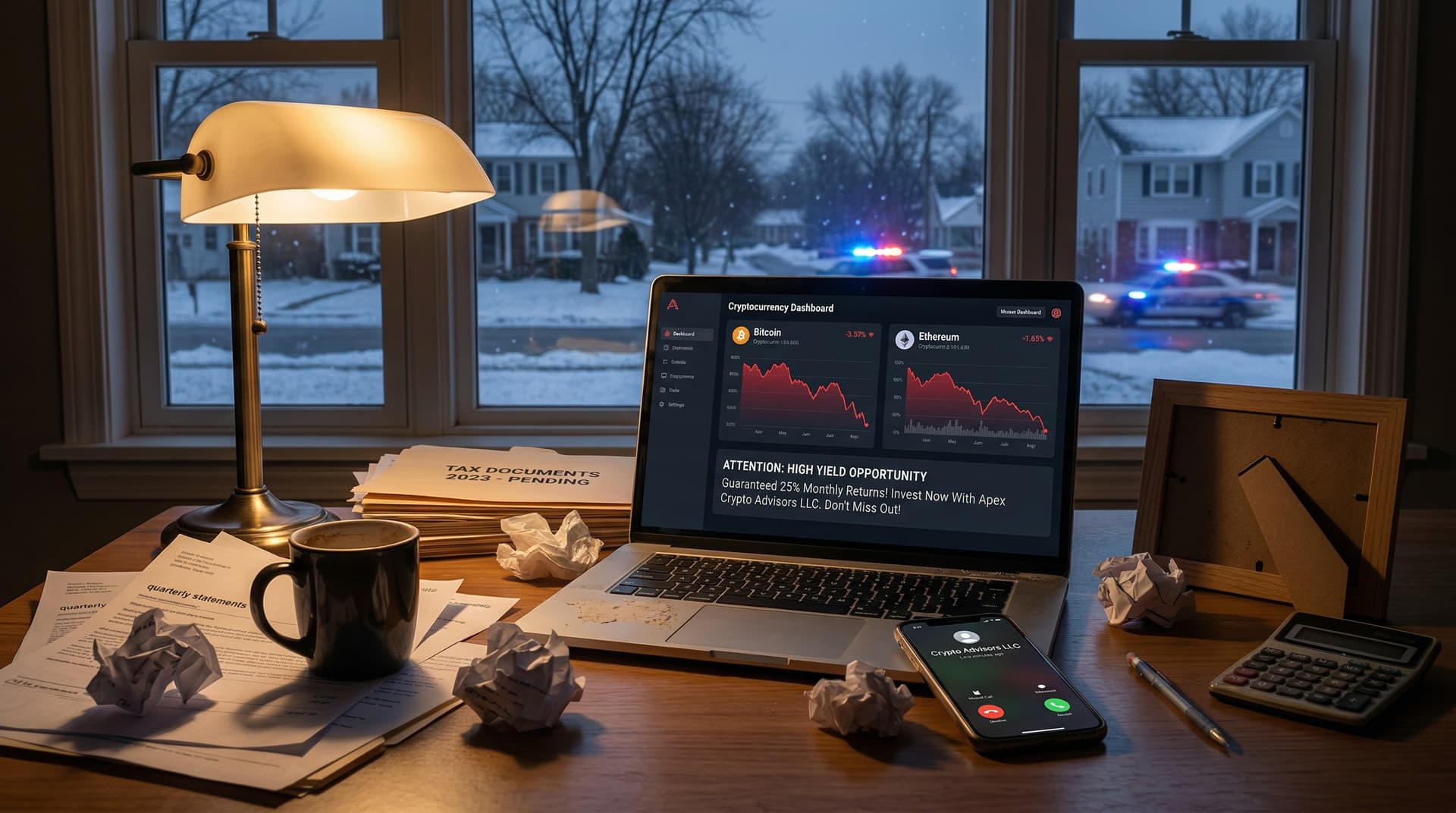
Linda Hargrove sat alone in her dimly lit Grand Rapids living room on April 10, 2026, when police knocked. A cryptocurrency scam had erased her entire $180,000 401(k). Scammers posed as financial advisors, luring her with promises of 25% returns on a fake crypto platform.
Hargrove, 62, spent 35 years on the assembly line at a local auto parts plant. She scrimped from every paycheck for retirement security. Now Social Security covers basics; her nest egg vanished last month amid Bitcoin's chaos.
How the Cryptocurrency Scam Unfolded
The trap sprang on March 15. A phone rang in her quiet home. An AI-cloned voice mimicked her trusted broker: "Crypto IRAs crush the market with low risk."
Hargrove clicked the link. The website gleamed with phony testimonials and skyrocketing charts. Over two weeks, she wired $180,000 in chunks. Blockchain hid the scammers' trail.
"They sounded so real, so professional," Hargrove told reporters that day, eyes fixed on blank statements. Dread grips her nights. Her home feels hollow.
Crypto Volatility Baits the Hook
Bitcoin hit $72,216 on April 10, up 1.5% (CoinMarketCap). The Fear & Greed Index read 16—extreme fear (Alternative.me). Retirees chased fast gains.
Fraudsters pounced. Deepfake Zoom calls displayed sleek offices. Hargrove trusted the "advisors." The sham exchange froze funds post-deposit, mimicking Coinbase.
She pictured vacations, grandkids' college funds. Instead, silence from the platform.
Tracing a Lifetime's Savings
Detective Maria Ruiz heads the Grand Rapids PD investigation. "We recovered 5% so far," Ruiz said April 10. Trails lead to Eastern European wallets; 50 retirees lost over $2 million.
The FBI links it to 10,000 scams in 2025, totaling $5.6 billion (FTC). Hargrove joined a class-action suit with blockchain experts. Neighbors drop off groceries. AARP provides aid.
"I feel stupid, but not isolated," she said, gripping a faded family photo.
Fintech's Double-Edged Blockchain
Crypto bridges traditional finance and blockchain. Fidelity offers legit 401(k) rollovers to crypto IRAs. JPMorgan handles blockchain payments.
Regulators scramble. The SEC flagged unregistered platforms April 8 (SEC.gov). FINRA noted a 30% jump in crypto complaints in Q1 2026, hitting seniors hardest (FINRA.org).
Congress eyes KYC mandates (House Financial Services Committee, April 9). Michigan AG warned after 200 local cases. Google develops AI voice detectors, but deployment delays.
Lessons from One Woman's Cryptocurrency Scam
Experts demand caution. Verify advisors via FINRA BrokerCheck. Ignore cold calls. Limit crypto to 5% of portfolios (Vanguard, April 2026).
Bitcoin nears $75,000 (Bloomberg, April 10). Hargrove shares her story to protect others. Her cryptocurrency scam shattered dreams, yet her warning now shields the vulnerable from fintech traps.