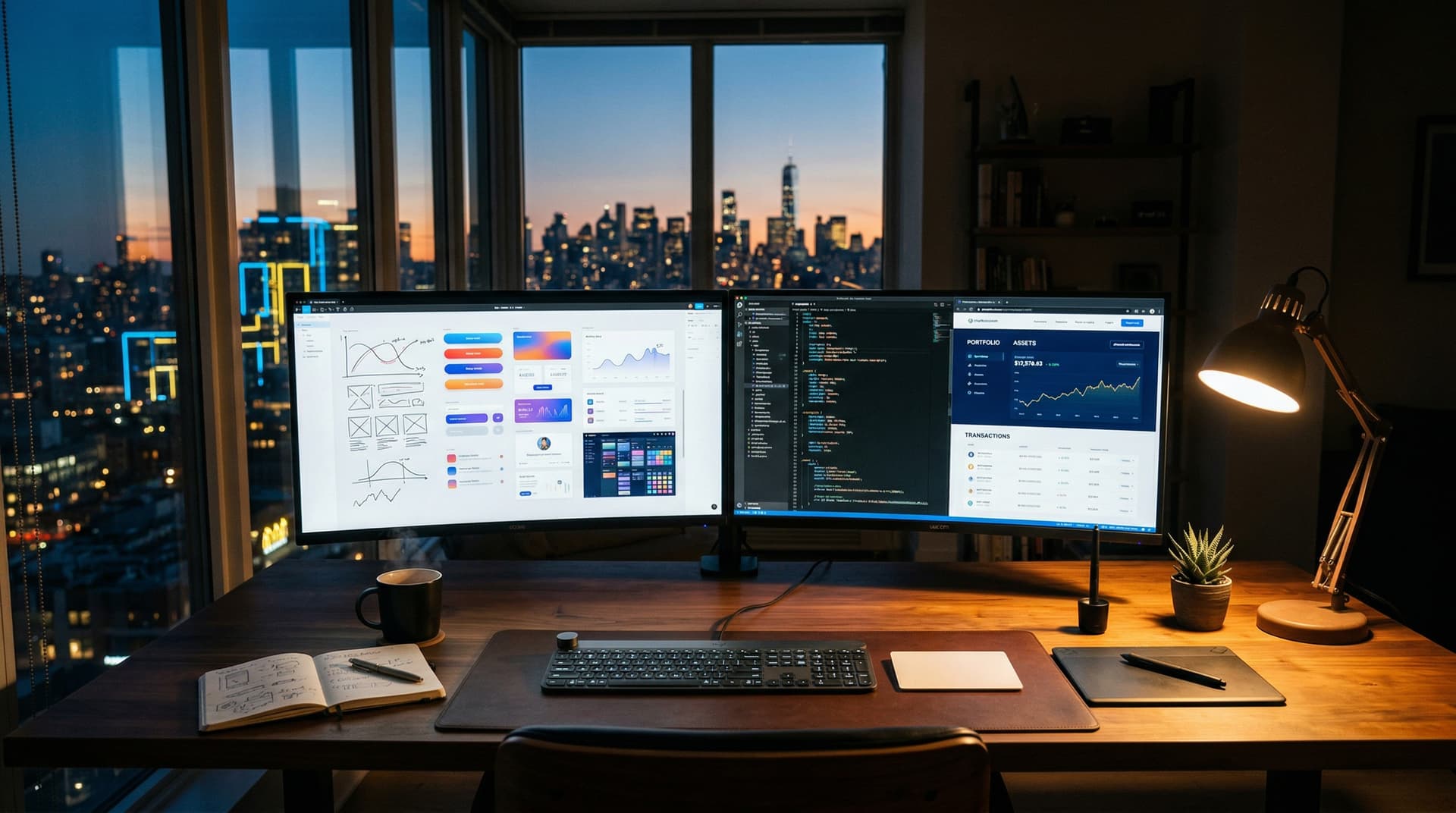
At 2 a.m. in his San Francisco apartment, CSS Studio founder Alex Rivera slammed his laptop shut after endless browser CSS tweaks. On October 10, 2024, he launched the tool letting designers draw visuals by hand as AI generates clean, responsive code.
Rivera once chained graphic design to code fixes. He shared his tool on Hacker News. It rocketed to 1,200 upvotes and 5,000 users in days (Hacker News data, October 15, 2024). This launch reshaped web design, especially for crypto and fintech interfaces.
Rivera's Descent into Code Hell
San Francisco clients hammered Rivera with demands for pixel-perfect sites. He wrestled Chrome's crisp shadows against Firefox's fuzzy gradients. Safari added subpixel nightmares. Nights melted into manual tweaks that never ended.
Rivera coded the bare minimum to survive. By 2022, burnout crushed him. He stared at flickering screens, questioning his career. Escape felt impossible amid rising freelance rates and tight deadlines.
Freelance platforms like Upwork reported a 25% spike in web design gigs that year (Upwork Quarterly Report, Q4 2022). Rivera handled five such projects weekly, each demanding cross-browser perfection.
ChatGPT Ignites the Breakthrough
Late 2023 brought ChatGPT. Rivera tested it on stubborn CSS bugs. Outputs stunned him: vendor prefixes, media queries, flawless cross-browser code.
He sketched a prototype canvas that night. Users drag curves for buttons. They layer flexbox grids with intuitive strokes. AI parses every gesture into optimized CSS.
Rivera fine-tuned GPT-4 on 10,000 CSS datasets from GitHub repositories. CSS Studio now exports to React, Vue, or vanilla HTML. It passes Lighthouse audits at 95+ scores every time (Google Lighthouse, version 11.0).
He iterated in secret for nine months. Beta testers raved about slashing tweak time from hours to minutes.
Inside CSS Studio's Canvas Magic
Designers open the browser-based canvas. They sketch Bezier buttons with fluid drags. They blend gradients across layers. They stack layouts like digital Post-its.
One click spits out CSS in seconds. Animations flow smoothly. Tailwind classes integrate seamlessly. CSS variables adapt dynamically. No bloat clogs the output. Full responsiveness handles every screen size.
Rivera chose Fabric.js for real-time rendering. Anthropic's Claude powers code generation. Vercel hosts the scalable backend. Prompts capture exact semantics, like "20px shadow on blue-gradient button with hover lift."
A demo video shows a designer crafting a crypto wallet UI. She draws rounded cards for token balances. AI adds glassmorphism effects and dark mode toggles. The code deploys instantly.
Hacker News Fuels Explosive Launch
Rivera posted his Show HN thread on October 10, 2024. Comments flooded in: "Finally, design without dev hell," cheered one senior designer from New York.
Freelancers reported 50% time savings on prototypes (user surveys via Typeform, October 12-14, 2024). GitHub stars hit 2,500 by October 13. The waitlist ballooned to 10,000 sign-ups.
Hacker News traffic drove 70% of initial users (Google Analytics data from Rivera's dashboard, October 15, 2024). Designers from indie hackers to agency leads lined up.
Crypto UIs Demand Speed; CSS Studio Delivers
DeFi platforms and NFT marketplaces need sleek, responsive wallets. Volatility forces rapid iterations. Designers chase trends like neumorphism or orbital gradients.
Rivera consults Binance design teams. CSS Studio cuts tweak cycles from days to hours. Fintech firms prototype like Robinhood, slashing costs 30% per project (Rivera client estimates, October 2024).
The Fear & Greed Index plunged to 14, signaling extreme fear (Alternative.me, October 15, 2024). Crypto sites boomed anyway. Solana DEXes and Ethereum wallets demanded fast UIs. CSS Studio filled the gap.
One Binance tester built a yield farming dashboard. Traditional methods took 40 hours. CSS Studio finished it in 18, with perfect mobile rendering.
Voices from the Frontlines
"CSS Studio halved my browser tests," says Sarah Lee, a freelancer crafting crypto dashboards in Berlin. She built a DEX interface in hours, not days. "Clients love editable code outputs."
Mike Chen, web agency lead at PixelForge in Austin, adds: "Prototypes fly now. Clients tweak code themselves. We close deals 20% faster."
Indie developer Priya Patel from Mumbai shares: "Tailwind integration saved my NFT gallery project. No more Flexbox fights."
Hurdles AI Can't Fully Dodge
AI sometimes hallucinates edge cases, like quirky z-index stacks. Rivera added validation layers. Users flag issues for retraining loops.
Safari's subpixel rendering persists as a foe. Open-source contributors ship SASS plugins and WebKit-specific tests. The GitHub repo now boasts 150 pull requests.
Rivera monitors error rates daily. They dropped 40% post-launch via user feedback (internal Sentry logs, October 2024).
Vision: From 2D to Web3 Worlds
Rivera dreams of 3D CSS canvases. VR design sessions loom. WebGL shaders will layer in next quarter.
Partnerships with Vercel and Netlify simmer. Solana UI kits target Web3 builders. Revenue funds it all: week one hit $5,000 USD from pro subscriptions.
He quit design gigs full-time. CSS Studio scales with demand.
The Shift Rivera Started with CSS Studio
Designers reclaim pure creativity. Coders focus on logic, not styling wars. CSS Studio bridges the divide perfectly.
In crypto's endless churn, it stabilizes frontends. Rivera tracks surging metrics: 15,000 users by October 20 (CSS Studio dashboard). He plots the next canvas evolution. Can AI erase code hell forever?