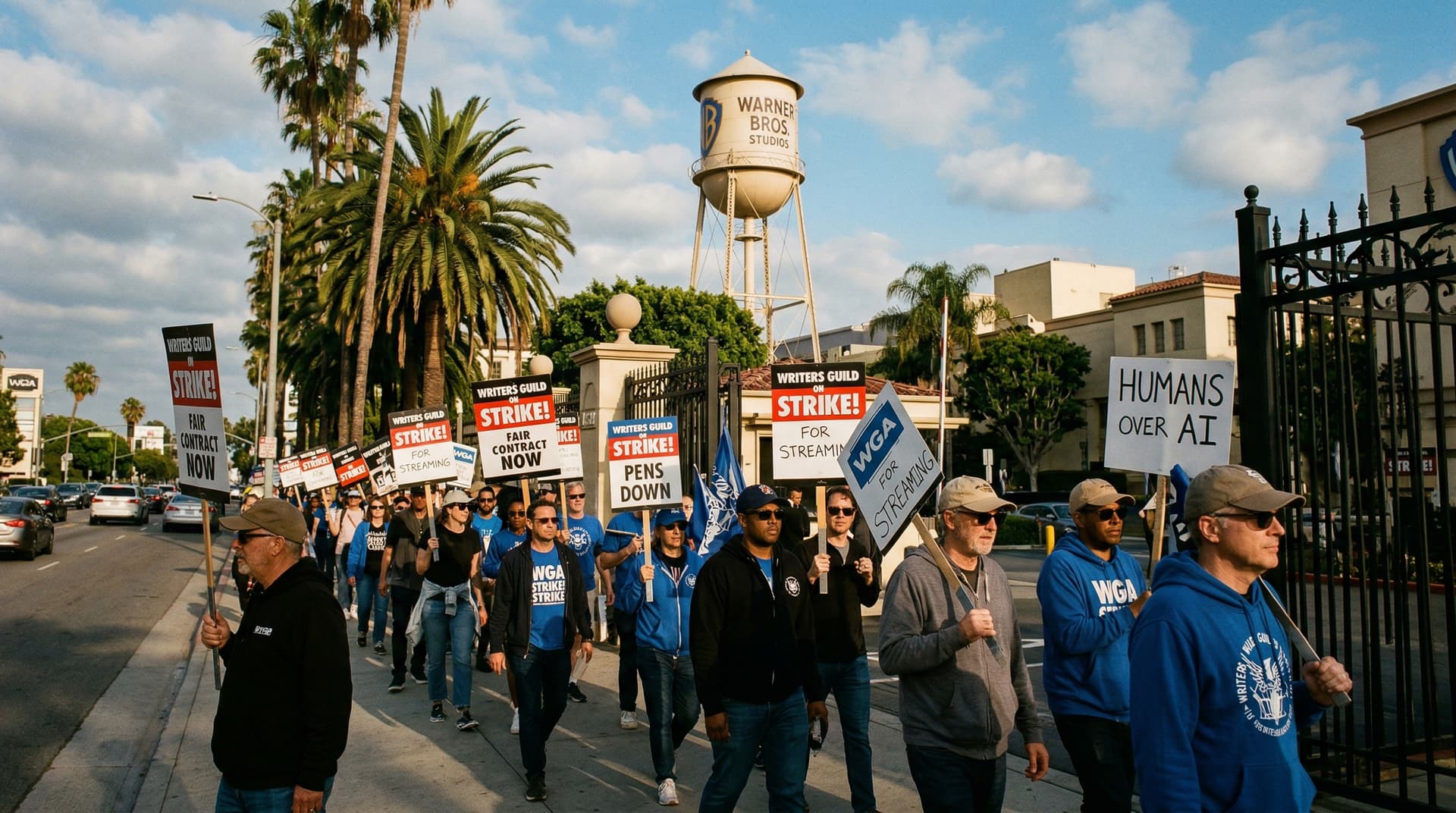
Los Angeles, May 28, 2023 – Under the relentless Southern California sun, a sea of determined faces lines the sidewalk outside Warner Bros. Studios in Burbank. Placards bob rhythmically: "No Contract, No Peace," "AI Can't Write Souls," "Fair Pay or Fade Away." It's day 26 of the Writers Guild of America (WGA) strike, the first major walkout since 2007-08, and the energy crackles like a script ready for its climax.
Meet Sarah Kline, a 42-year-old staff writer on a hit Netflix dramedy. Once earning a comfortable living in the pre-streaming era, she's now picketing full-time, her two kids back home in a modest Valley apartment. "I used to make enough residuals from reruns to pay the mortgage," she tells me, wiping sweat from her brow. "Now? Streaming checks are pennies. And AI? It's like they're auditioning robots to replace us." Sarah's story echoes across the lines – a microcosm of how digital disruption has upended Hollywood's creative class.
The strike, authorized on April 2023 ballots with 97.9% approval, erupted at midnight on May 2 when talks with the Alliance of Motion Picture and Television Producers (AMPTP) – representing Disney, Netflix, Amazon MGM Studios, Warner Bros. Discovery, and others – collapsed. Demands are threefold: better residuals from global streaming hits (where writers get about 0.4% of distributor's gross, versus 1.4% in 1988), curbs on "mini-rooms" (short-term writing teams that suppress staff jobs), and ironclad protections against artificial intelligence supplanting human writers.
The Streaming Revolution's Bitter Aftertaste
Rewind to 2017. The WGA won groundbreaking gains in the streaming era, securing residuals based on viewership. But as platforms like Netflix exploded – boasting 232 million subscribers by Q1 2023 – the formula soured. High-profile shows like The Crown or Stranger Things rake billions, yet writers report residuals as low as $27,000 annually for series staffers, per guild surveys. "It's predatory," says David Goodman, WGA West negotiating committee co-chair. "They profit on our backs while pretending profitability is elusive."
Investigative dives by outlets like The Hollywood Reporter reveal the math: Netflix's 2022 revenue hit $31.6 billion, Disney's streaming arm $22.7 billion combined. Yet AMPTP claims losses to justify stingy offers. Mini-rooms exacerbate this: Studios hire skeleton crews for 2-10 weeks at reduced rates, delaying staff hires and fostering instability. "It's gig economy hell for artists," Kline adds.
AI: The Existential Plot Twist
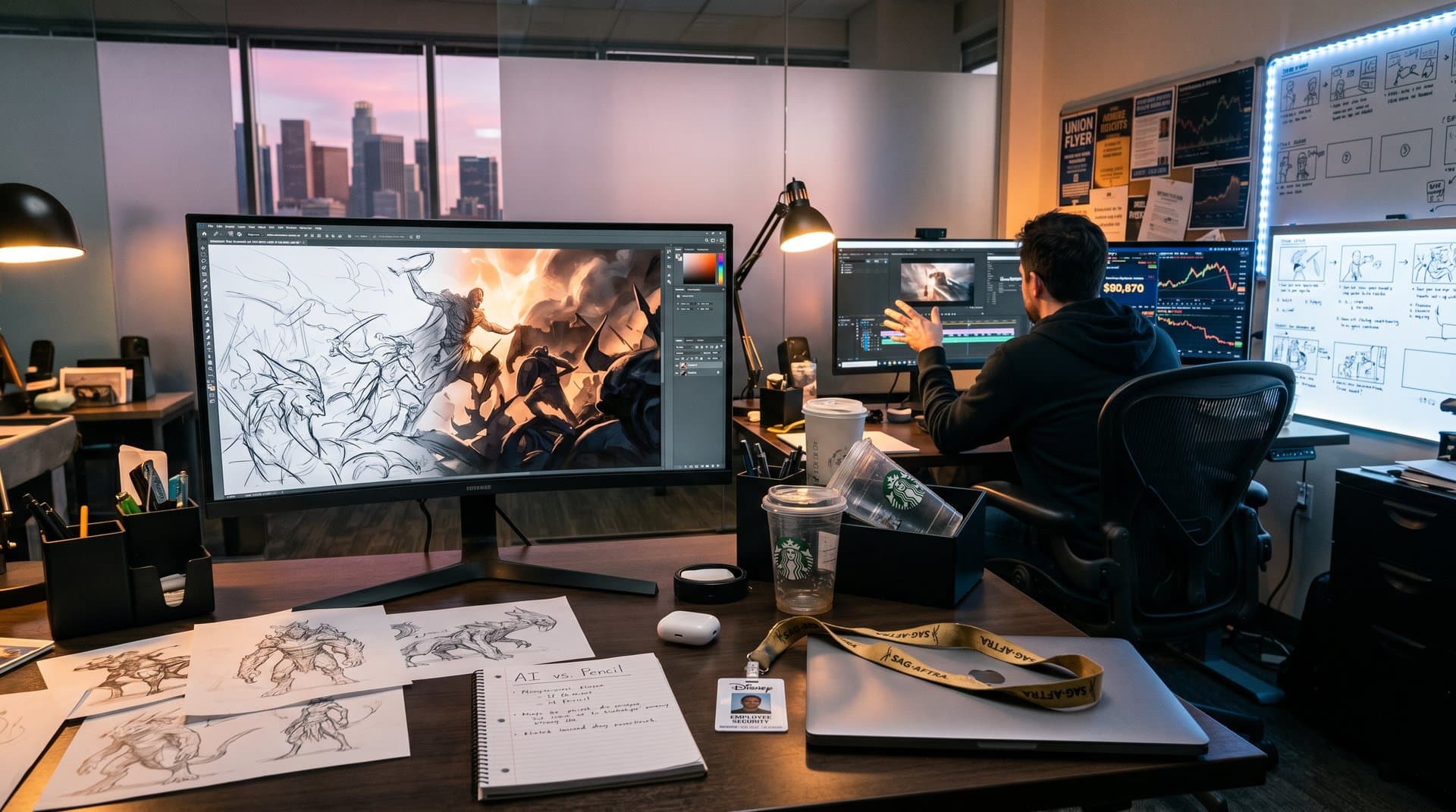
Enter the villain du jour: AI. Tools like OpenAI's ChatGPT, launched November 2022, and Google's Bard (updated at I/O May 10) can now generate scripts, dialogue, even full pilots in seconds. Warner Bros. Discovery CEO David Zaslav mused in February about AI as a "great tool." Paramount's Bob Bakish echoed, eyeing it for efficiencies.
The WGA proposes: AI can't rewrite or train on covered material without consent; no credits or residuals to AI outputs. AMPTP balks, calling it "unrealistic." But guild leaders cite precedents – SAG-AFTRA, whose contract expires June 12, shares AI fears. "Machines lack lived experience," says novelist-turned-screenwriter Marcus Hale, 35, whose debut spec sold but now languishes. "I write from divorce pain, immigrant roots. GPT? It parrots data."
On the line, I witness tech demos gone wrong: A protester inputs a Succession prompt into ChatGPT; the bot spits bland corporate intrigue. Laughter ripples. Yet anxiety simmers. A 2023 USC study warns AI could automate 20-30% of writing tasks by 2026, hitting entry-level jobs hardest.
Picket Lines and Personal Stakes
Narrative threads weave through the strikers. Elena Vasquez, 28, Latina writer from East LA, reps the guild's diversity push. "Pre-streaming, Latinos were 4% of writers; now 7%, but residuals keep us broke," she says. Her family's taqueria supports her, but dreams of stability fade.
Veteran Tony Ruiz, 62, Oscar-nominated for 1990s dramas, pickets with a cane. "I survived two strikes; this one's scarier. AI doesn't unionize." His pension? Eroding under inflation (CPI up 4.9% April 2023).
Pickets rotate 24/7, from Netflix's Sunset strip fortress to Amazon's Culver City hive. Chants, bullhorns, celebrity cameos – Lin-Manuel Miranda, Seth Rogen – boost morale. Late-night shows like The Tonight Show dark since May 2, as writers pen those too.
Broader Ripples in Society
This isn't just Hollywood. The strike spotlights America's labor reckoning: 2023's seen 300+ walkouts, from Amazon warehouses to Starbucks. In creative industries, it questions humanity's role amid tech ascendancy. Economists peg daily losses at $200 million industry-wide; LA's 2.7 million jobs feel the pinch.
Investigative lens: Leaked AMPTP emails (per Variety May 2023) show execs strategizing "endurance tests." Public sentiment? Polls show 70% American support for strikers, weary of corporate excess post-COVID.
As May 28 dawns, no breakthrough. Biden aides met guild leaders May 9, urging resolution. SAG-AFTRA eyes solidarity. Writers vow endurance: "We've scripted tougher endings."
Sarah Kline slings her sign: "This is our story – and we're rewriting it." In Tinseltown, where fiction blurs reality, their fight feels like the blockbuster we need.
Word count: 912