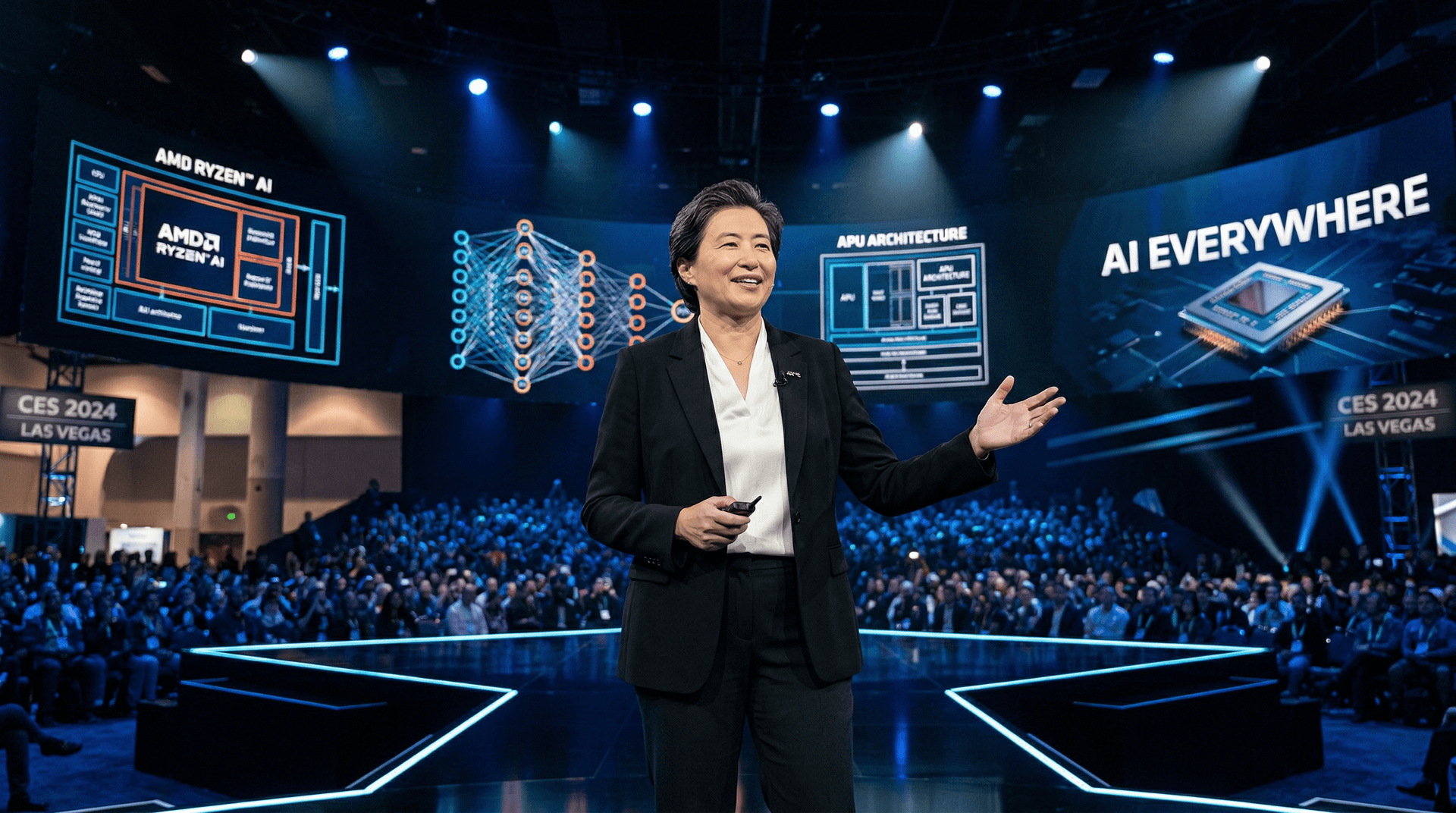
Las Vegas, January 9, 2024 – Amid the neon chaos of CES, the world's largest consumer electronics show, a poised woman in a sharp black blazer steps onto a massive stage. Spotlights cut through the haze as Lisa Su, CEO of Advanced Micro Devices (AMD), addresses a sea of journalists, execs, and gadget enthusiasts. 'AI is transforming everything,' she declares, her voice steady and precise, unveiling the Ryzen 8040 series – the world's first consumer laptop chips with dedicated AI engines. The crowd erupts. For Su, 54, this moment caps a improbable ascent: from a shy immigrant child in the Bronx to the architect of AMD's resurgence as a $200 billion powerhouse rivaling Nvidia in the white-hot AI race.
Su's story isn't one of Silicon Valley flash; it's narrative of relentless engineering and understated determination. Born in 1969 in Taoyuan, Taiwan, she arrived in the U.S. at age three with her family, fleeing political uncertainty for the promise of the American Dream. Her father, a statistician, and mother, a school principal and accountant, instilled discipline in their new Bronx apartment. Young Lisa excelled at the elite Bronx High School of Science, where her fascination with circuits bloomed. 'I always loved taking things apart,' she later recalled in rare interviews, dissecting radios and dreaming of building the future.
MIT called next. Su powered through a bachelor's, master's, and PhD in electrical engineering by 1994, her thesis on silicon-on-insulator technology hinting at the chip innovations to come. Fresh out of grad school, she joined Texas Instruments, then IBM's famed Watson Research Center, tackling the physics of shrinking transistors. By 2007, she'd risen to VP at Freescale Semiconductor. But AMD beckoned – a scrappy underdog bleeding cash, dwarfed by Intel's monopoly.
The AMD Turnaround: High Stakes and Heartache
AMD hired Su in 2007 as VP of technical strategy. The company was in freefall: market share under 20%, $4 billion debt, bankruptcy whispers. Su dove in, championing 'chiplet' designs – modular processors like Lego bricks, cheaper and more powerful than monoliths. As general manager of the Zen project in 2012, she bet big on high-performance computing when others chased mobile.
2014 was do-or-die. AMD's board ousted CEO Rory Read; Su, with no CEO experience, was tapped instead. Skeptics scoffed – another engineer in the corner office? But Su's first move was brutal: slash 15% of staff, refocus on data centers and gaming. 'We had to be honest about our position,' she said. Privately, friends say the layoffs haunted her – a mother of two weighing family dinners against survival.
The gamble paid off. Zen chips launched in 2017, demolishing Intel in benchmarks. Ryzen crushed laptops; Epyc dominated servers. By 2020, AMD's revenue tripled to $9.8 billion. COVID accelerated the shift: remote work, cloud boom, crypto mining. Su's prescience shone. Then AI exploded post-ChatGPT. Nvidia's GPUs led, but Su positioned AMD's MI300X accelerators as cost-effective alternatives, snagging deals with Microsoft Azure and Oracle.
Her personal life mirrors the balance. Married to Daniel Lin, a former AMD colleague, Su shields her family from spotlight. They live in Los Gatos, California, raising two children who, per Su, 'keep me grounded.' Weekends mean hiking or piano practice – remnants of her classical training. 'Success is having time for what matters,' she told Fortune in 2023.
CES 2024: AI's New Frontier
Back at CES, Su's keynote pulses with demos: AI accelerating video edits on laptops, neural processing units (NPUs) rivaling Apple's M-series. The Ryzen AI 300 series promises 50 TOPS of AI performance – enough for on-device Copilots without cloud crutches. Partners like Lenovo and HP nod approval; stock ticks up 2%.
It's personal vindication. Women lead just 10% of Fortune 500 firms; Asian-Americans, fewer. Su shuns quotas, crediting merit: 'Hard work and results speak.' Yet her rise inspires: Time's 2023 CEO of the Year, Bloomberg's top chip exec. Nvidia's Jensen Huang praises her privately; publicly, it's war for AI dominance.
Challenges linger. U.S.-China tensions threaten supply chains; TSMC fabs are lifelines. AMD trails Nvidia's CUDA ecosystem, but Su's open-source ROCm pushes back. At CES side chats, she hints at partnerships: 'Ecosystems win.' Offstage, she greets Taiwanese execs warmly, nodding to roots.
Legacy in the Making
As CES buzz fades January 11, Su jets home. AMD's market cap nears $240 billion; 2023 revenue hit $22.7 billion, up 4%. Analysts eye 2024 growth at 15%. But for Su, metrics are means, not ends. In a 2021 interview, she mused, 'Technology should improve lives – healthcare, climate, education.' AI PCs, she argues, democratize intelligence, powering tutors for Bronx kids like her younger self.
Critics nitpick: AMD's gross margins lag Nvidia's; execution slips happen. Yet Su's tenure – from near-death to contender – is textbook revival. Investors adore her 1,400% stock return since 2014.
In Vegas throngs, one engineer approaches: 'You made me believe in underdogs.' Su smiles, signs a program. Quietly, she reshapes computing. As AI reshuffles the world, Lisa Su stands ready – engineer's mind, mother's heart, leader's vision.
Word count: 912