- Tennessee bans all crypto ATMs, costing hosts $500/month per machine.
- Scam victims lose ATM records for tracing $15M+ national fraud.
- BTC at $76,254 with Fear & Greed at 29 amid state crackdown.
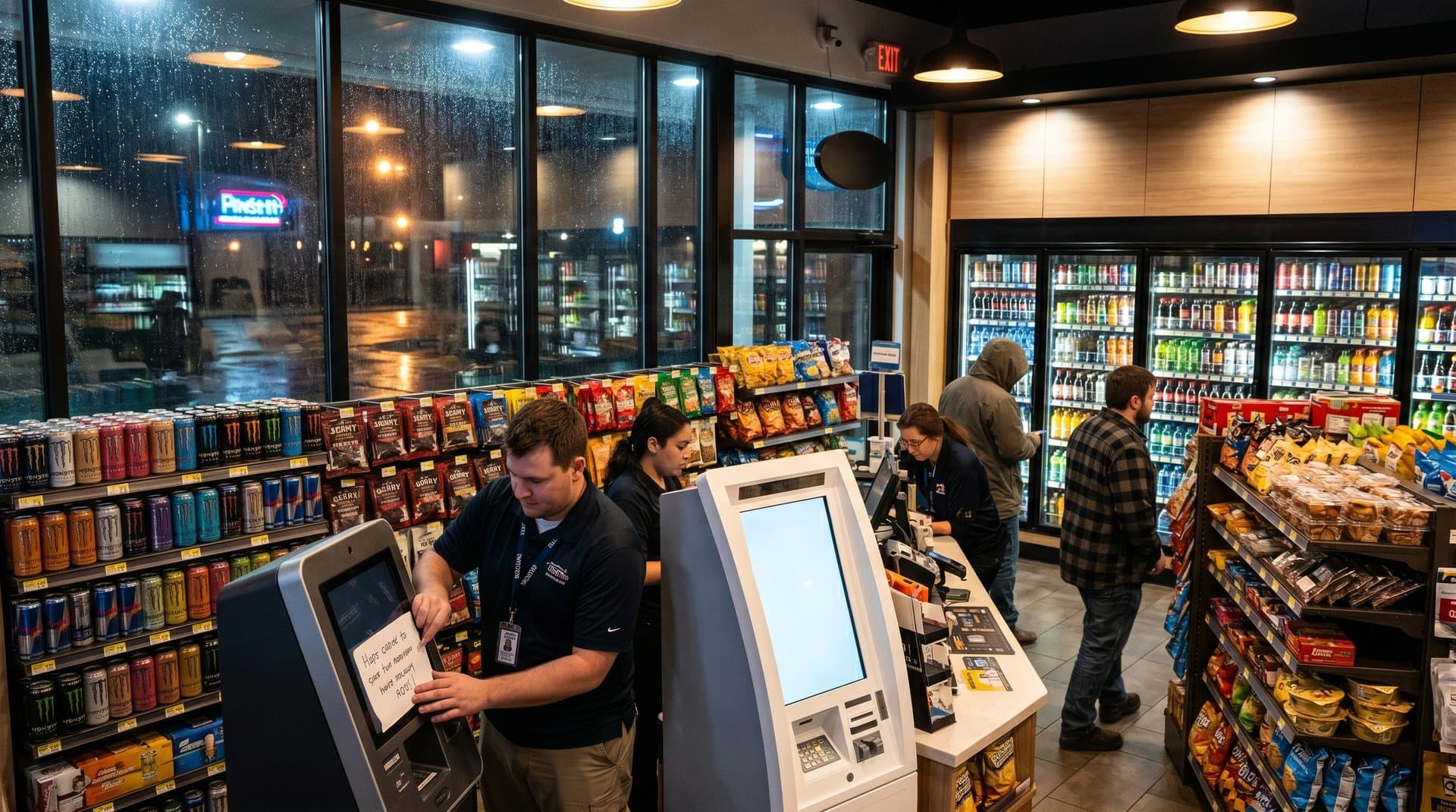
The Tennessee crypto ATM ban took effect today, forcing Nashville gas station owner Maria Gonzalez to unplug her $12,000 Bitcoin machine at midnight. She stands in the dim glow of fluorescent lights, sweat beading on her forehead as she yanks the power cord. Lawmakers targeted high fees and scams, reports Nashville Post. Bitcoin trades at $76,254 per CoinGecko.
Gonzalez stares at the empty counter space where the kiosk once hummed with late-night transactions. The machine generated $500 monthly commissions from cash-to-crypto swaps—enough to cover her light bill and more. With zero grace period, she now hauls it to storage, bracing for a 5% revenue dip.
Small Business Impact from Tennessee Crypto ATM Ban
Convenience stores hosted 80% of Tennessee's 200+ crypto ATMs, drawn by steady foot traffic for supplemental income. Banks shunned crypto, so cash-heavy gas stations filled the void. Hosts pocketed 10-20% transaction cuts, turning quiet corners into crypto hubs.
"This paid my light bill and then some," Gonzalez told PeopleReportage. She installed the kiosk last year, attracting truckers and night-shift workers avoiding bank hours. One chain operator reports $50,000 annual losses across 10 locations. Forums like Reddit's r/Tennessee buzz with lawsuit threats as owners pivot to vending machines or traditional ATMs.
State Sen. Todd Gardenhire (R-Chattanooga), the bill's sponsor, championed the ban. "Fees hit 30%. Scams explode," he told The Tennessean on April 18. Tennessee Department of Financial Institutions Director Greg Gonzales enforces it immediately, warning of $10,000 fines for non-compliance.
The ban disrupts more than revenue. Gas stations in rural counties lose a key draw for customers, who now drive farther for crypto access. Operators scramble to repurpose space, but replacement income lags.
Bitcoin sits at $76,254, down 0.4% today. Ethereum falls to $2,270.12 (-1.0%). XRP holds $1.38 (-0.1%). BNB drops to $619.25 (-0.9%). Fear & Greed Index plunges to 29, signaling extreme fear.
- Asset: BTC · Price (USD): $76,254 · 24h Change: -0.4%
- Asset: ETH · Price (USD): $2,270.12 · 24h Change: -1.0%
- Asset: XRP · Price (USD): $1.38 · 24h Change: -0.1%
- Asset: BNB · Price (USD): $619.25 · 24h Change: -0.9%
Data from CoinGecko, April 25, 2024.
Crypto Scams Thrive on ATM Vulnerabilities
Scammers exploited ATMs with 15-30% premiums, luring victims to insert cash for irreversible blockchain transfers. Seniors and immigrants bore the brunt, lacking tools to track funds.
John Ramirez, 72, a retired Memphis mechanic, lost $2,500 last month. "They promised quick Bitcoin. The scanner took my cash, and it vanished forever," he shares with PeopleReportage. ATM logs could trace recipient wallets, but the ban erases that access for ongoing cases.
The U.S. Department of Justice sued operators for $15 million in scams, per CoinDesk on March 21. "Victims demand transaction data now unavailable," says DOJ prosecutor Sarah Jenkins in court filings.
Tennessee logged 500+ complaints last year, per state finance officials. Blockchain explorers like Etherscan aid experts, but novices struggle. While the ban halts new fraud, it complicates justice for past victims, forcing reliance on operator cooperation.
Ramirez joins a growing chorus demanding exemptions for licensed machines with record-keeping mandates. Families affected by scams rally online, sharing stories of drained savings.
Market Reaction and Emerging Alternatives to Tennessee Crypto ATM Ban
Broader markets react warily. BlackRock's Bitcoin ETF sees inflows slow to $1.2 billion weekly since January approval, per ETF.com. Tennessee's move hints at U.S. regulatory tightening, spooking investors.
Cash-preferring users miss ATMs' instant bridge to crypto. Coinbase and Cash App push point-of-sale options in stores, but rural Tennesseans resist app-based wallets. DeFi platforms surge globally, offering kiosk-free access via smartphones.
Owners like Gonzalez vow legal fights. "We'll battle this in court," she declares, eyeing summer rulings. Regulators stand firm, prioritizing consumer protection over innovation.
Fear & Greed at 29 signals caution. BTC tests $76,254 support amid volatility. The Tennessee crypto ATM ban reshapes local access, balancing scam prevention against small business survival and victim recovery. Courts could license compliant machines soon, restoring some machines by summer.
Frequently Asked Questions
Why did Tennessee enact the crypto ATM ban?
Lawmakers targeted 15-30% fees and scams enabling irreversible fraud transfers. Sen. Todd Gardenhire cited 500+ complaints, per Nashville Post and The Tennessean.
How does the Tennessee crypto ATM ban impact small businesses?
Gas stations lose $500 monthly commissions per machine plus removal costs. Owners like Maria Gonzalez face 5% revenue dips and pivot to alternatives.
What challenges face scam victims after the ban?
Lost ATM logs hinder tracing blockchain sends. Victims like John Ramirez seek operator data now unavailable amid DOJ's $15M scam probes.
How might crypto access change post-Tennessee crypto ATM ban?
POS apps like Coinbase emerge, but cash users lack instant options. BTC at $76,254 and ETFs offer indirect paths as courts weigh challenges.