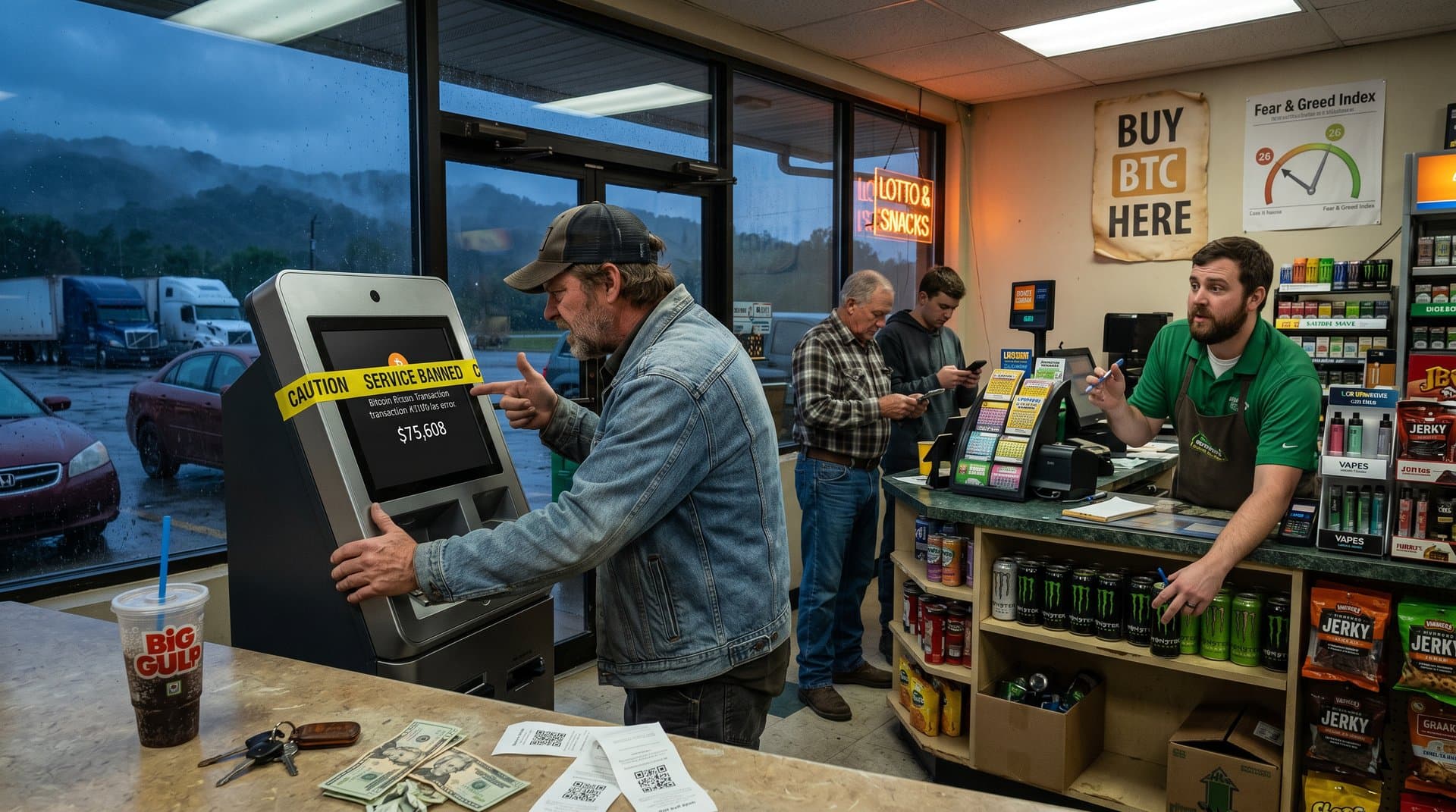
- Tennessee crypto ATM ban passed April 10, 2024, as second U.S. state action.
- Bitcoin drops 1% to $75,608; Fear & Greed Index at 26 signals fear.
- Small operators lose 80% revenue; scam victims seek $240M DOJ-backed refunds.
Tennessee lawmakers enacted a statewide crypto ATM ban on April 10, 2024. The prohibition targets scam-plagued kiosks. It makes Tennessee the second U.S. state to act, The Tennessean reports.
In Chattanooga's neon-lit gas stations at dusk, operator Mike Harlan powers down his $5,000 General Bytes machine. Dust gathers on the screen frozen at a Bitcoin transaction. Harlan served truckers and unbanked workers. He loses 80% of his revenue overnight. Harlan wipes sweat from his brow in the humid evening. "These kiosks were my edge in a cash-only town," Harlan told The Tennessean. "Truckers needed quick Bitcoin for remittances at midnight."
Bitcoin trades at $75,608 USD. It fell 1.0% over 24 hours, per CoinGecko. Ethereum dropped 2.8% to $2,236.83. The Fear & Greed Index hit 26, signaling deep fear, according to Alternative.me.
- Asset: BTC · Price (USD): 75,608 · 24h Change: -1.0%
- Asset: ETH · Price (USD): 2,236.83 · 24h Change: -2.8%
- Asset: XRP · Price (USD): 1.36 · 24h Change: -1.8%
- Asset: BNB · Price (USD): 613.35 · 24h Change: -1.7%
Scams Drive Tennessee Crypto ATM Ban
Fraudsters exploited kiosks that charged 10-20% fees. Victims scanned wallets but received no Bitcoin. Consumer complaints surged and triggered the ban, The Tennessean detailed.
Tennessee regulators flagged ignored warnings. The U.S. Department of Justice charged ATM operators in a $240 million scam. Reuters reported the charges on September 21, 2023. The law halts new installations. It phases out existing kiosks within months.
Nashville resident Sarah Kline stares at her phone. She lost $2,000 to a kiosk scam. "I inserted cash and scanned my wallet. No Bitcoin showed up," Kline shared with local outlets. She pursues refunds through class-action suits. The state attorney general backs these with asset freezes.
Small Operators Reel from Tennessee Crypto ATM Ban
Harlan pivots in Chattanooga. He guides customers to Coinbase apps on his phone. Maintenance already consumed 30% of his profits. Now he plans to sell hardware on secondary markets.
Knoxville operators train truckers on Cash App wallets. Cash-dependent users suffer without instant access. Blockchain trackers like Etherscan trace stolen funds. Yet kiosks offered speed for the unbanked.
The Federal Reserve's 2023 Economic Well-Being of U.S. Households report pegs 4.5% of U.S. households as unbanked. That equals 5.9 million families. They used ATMs for crypto entry. Centralized exchanges demand bank verification. This slows adoption.
National Ripple Effects of Tennessee's Crypto ATM Crackdown
New York imposed strict licensing in 2018. The rules curbed unlicensed kiosks. Colorado fined rogue operators $100,000 each last year. Tennessee's full ban sets a precedent. It mirrors Europe's MiCA regulations set for 2026.
Federal Trade Commission data attributes 30% of 2023 crypto scams to ATMs. Losses totaled $1.7 billion. Banning kiosks cuts easy fraud paths. USDT stablecoin holds at $1.00 USD. Traders flee volatility.
Operators lobby for KYC upgrades as alternatives. Regulators focus on consumer protection amid Bitcoin swings. The Tennessee crypto ATM ban signals more 2025 state actions. It squeezes cash-to-crypto on-ramps. Bitcoin's 21 million supply cap endures.
Frequently Asked Questions
Why did Tennessee implement the crypto ATM ban?
Lawmakers cited scam complaints and 10-20% fees at kiosks. The Tennessean reported consumer losses from fraud drove the prohibition on April 10, 2024.
What are crypto ATMs and how do they work?
Users insert cash to buy Bitcoin or Ethereum via wallet scan. High fees apply, bypassing banks but drawing scammers with poor oversight.
How has the market reacted to Tennessee crypto ATM ban?
Bitcoin fell 1.0% to $75,608 USD. Fear & Greed Index dropped to 26. Ethereum declined 2.8% on regulatory fears.
Which states restricted crypto ATMs before Tennessee?
New York mandated strict licensing. Colorado cracked unlicensed operators. Tennessee escalates with a full statewide ban.