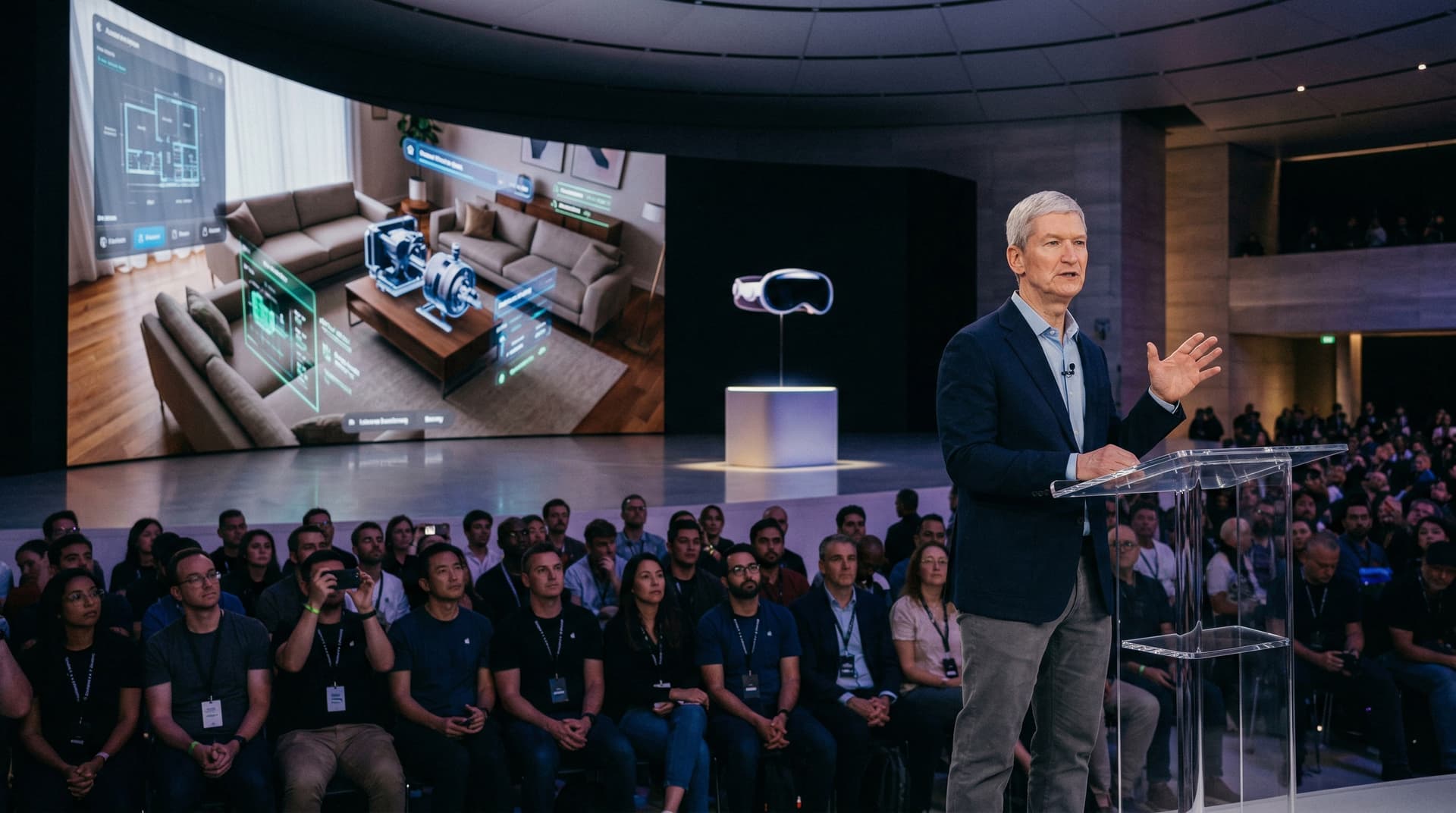
In the gleaming expanse of Apple Park's Steve Jobs Theater, under the watchful eyes of thousands tuning in virtually, Tim Cook stepped onto the stage on June 5, 2023. The air was electric with anticipation. It was WWDC, Apple's annual pilgrimage for developers, but this year felt different. Cook, the steady hand guiding Apple since 2011, adjusted his microphone and uttered words that would echo through the tech world: "Apple Vision Pro is the spatial computer that seamlessly blends the real and digital worlds."
For Cook, a man whose career has been defined by quiet competence rather than Jobsian theatrics, this was a defining moment. At 62, the Alabama-born operations wizard has spent over two decades at Apple, rising through the ranks from supply chain maestro to CEO. He's navigated supply shortages, trade wars, and the pandemic with pragmatic precision. But Vision Pro? This was his moonshot—a $3,499 headset that doesn't just augment reality but reimagines it as "spatial computing." No clunky VR goggles here; this was Apple polishing mixed reality to a mirror shine.
The demo that followed was pure theater, humanizing the tech. A woman in a cozy living room donned the device, her eyes widening as digital windows floated around her kitchen table. She pinched the air to expand a photo of her family, then swiped to pull up a life-sized video call with friends laughing on her couch. "It's not just a headset," Cook had said earlier. "It's a new computer that allows us to be more creative and productive." The crowd erupted. Developers in the audience, many sporting Apple hoodies and laptops scarred from late-night coding, exchanged wide-eyed glances. One, Sarah Lin, a 28-year-old indie app developer from San Francisco, later told reporters, "It felt like magic. I could see myself building apps that let people relive memories in 3D."
Behind the curtain, the story is one of relentless human endeavor. Vision Pro's genesis traces back years, to secretive teams in Cupertino toiling in blacked-out labs. Mike Rockwell, Apple's VP of Immersive Experiences, a former NASA engineer with a penchant for big ideas, led the charge. His team wrestled with eye-tracking tech so precise it follows your gaze at 12 frames per second, micro-OLED displays packing 23 million pixels, and custom R1 and M2 chips devouring data at light speed. But it was the human calibration that shone: dozens of Apple employees modeled for the demo, lending their faces and voices to create photorealistic digital avatars called "Persona."
Cook's personal stake in this? It's about legacy. Steve Jobs revolutionized phones and music; Cook has dominated wearables and services. Now, with iPhone sales plateauing amid economic headwinds, Vision Pro eyes a trillion-dollar spatial computing market. Analysts whisper of enterprise goldmines—surgeons practicing ops in 3D, architects walking virtual job sites. Yet Cook emphasized the intimate: watching NBA playoffs with friends oceans away, or reliving a child's first steps in immersive 3D video.
Not everyone was sold. Critics noted the eye-watering price, steep even for Apple's faithful. "It's genius tech, but who can afford it?" pondered Raj Patel, a New York graphic designer watching the keynote from a coffee shop. Privacy hawks raised eyebrows at always-on cameras and mics, though Apple touted on-device AI processing to keep data local. And accessibility? The headset's weight and prescription lens add-ons aim to bridge gaps, but early adopters will be wealthy early adopters.
As the week unfolded at WWDC, sessions buzzed with fervor. Developers like Jamal Washington, a 35-year-old father from Atlanta building AR education apps, huddled in groups dissecting visionOS, Apple's new platform. "This could change how kids learn history," he said, sketching interfaces on his iPad. Sessions revealed tools for Unity integration and SwiftUI adaptations, empowering creators worldwide. One highlight: a collaboration demo where musicians composed in floating 3D space, instruments materializing around them.
Cook's keynote wasn't just product porn; it was a narrative of human potential. He recounted Apple's pandemic pivot to remote work, how FaceTime kept families close. Vision Pro extends that intimacy exponentially. Imagine elderly parents joining grandkids at the dinner table via life-sized holograms, or therapists guiding patients through virtual exposure therapy. It's sci-fi turned personal.
Yet, the real intrigue lies in the people powering it. Take Angela Tung, a 40-something optical engineer whose team perfected the panoramic video capture. Or the unsung QA testers enduring hours in prototypes, fine-tuning hand gestures until they felt natural. Their stories, pieced from insider whispers and post-keynote panels, paint Apple not as a monolith but a hive of dreamers.
By June 11, as pre-orders loomed for early 2024, the ripple effects were clear. Stock dipped slightly on valuation concerns but rebounded on developer excitement. Partners like Disney announced immersive content pipelines. For Cook, it's validation: the man once dubbed "chief operating robot" by detractors has authored Apple's next chapter.
In a world fraying at the edges—wars raging, economies wobbling—Vision Pro offers escape and empowerment. It's Tim Cook's gift to humanity: a lens to expand our realities, one eye-tracked glance at a time. As he closed the keynote, gazing at the sea of applauding devs, you could see it in his eyes—the quiet thrill of a visionary awakened.
(Word count: 912)